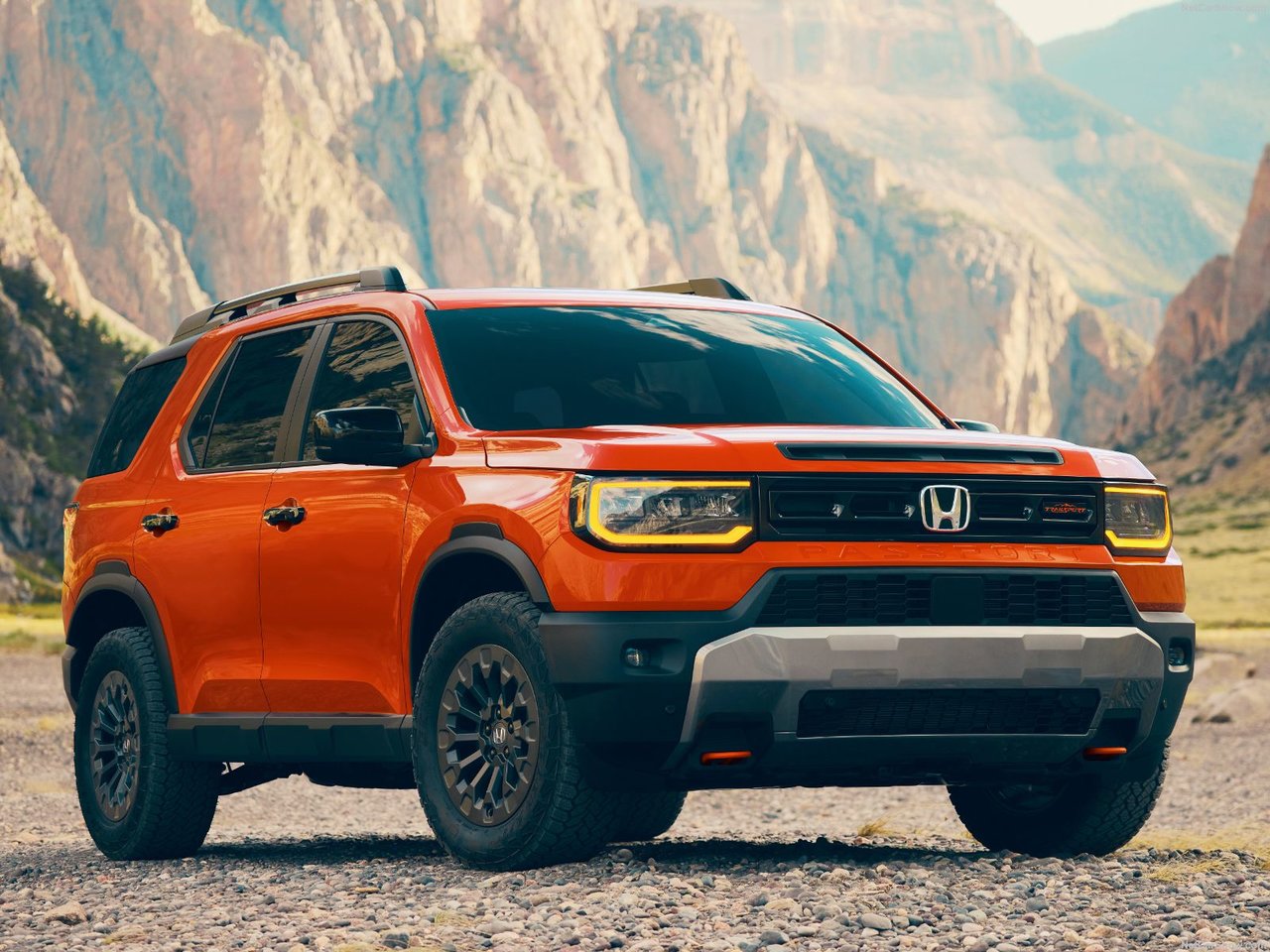
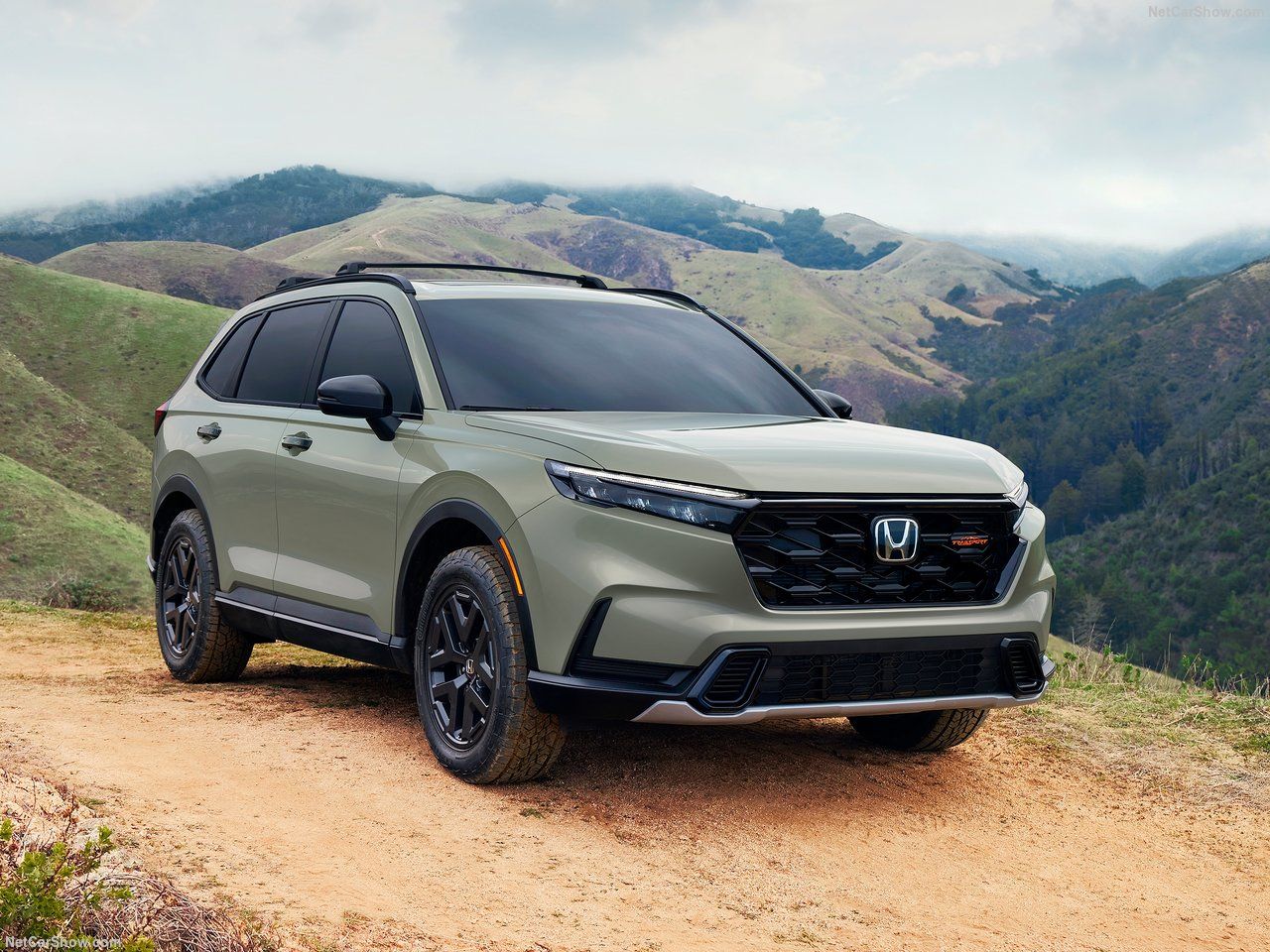
The 2026 Honda Passport is completely redesigned with a clearer focus on rugged capability. In Canada, every version belongs to the TrailSport family, giving buyers standard all-wheel drive, all-terrain tires, an off-road-tuned suspension and additional underbody protection.
At the same time, the Passport remains a comfortable five-passenger midsize SUV with a large cargo area, modern connectivity and comprehensive driver-assistance technology. Here are detailed answers to five of the questions buyers most frequently ask about it.
1. What is new about the 2026 Honda Passport?
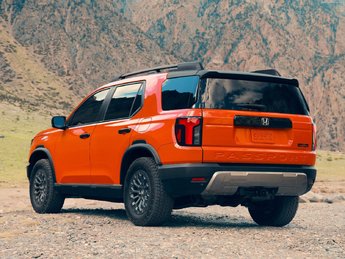
The 2026 Passport represents a new generation rather than a minor styling update. It has a more upright, adventure-oriented exterior, a longer wheelbase and a cabin redesigned around passenger comfort, storage and visibility.
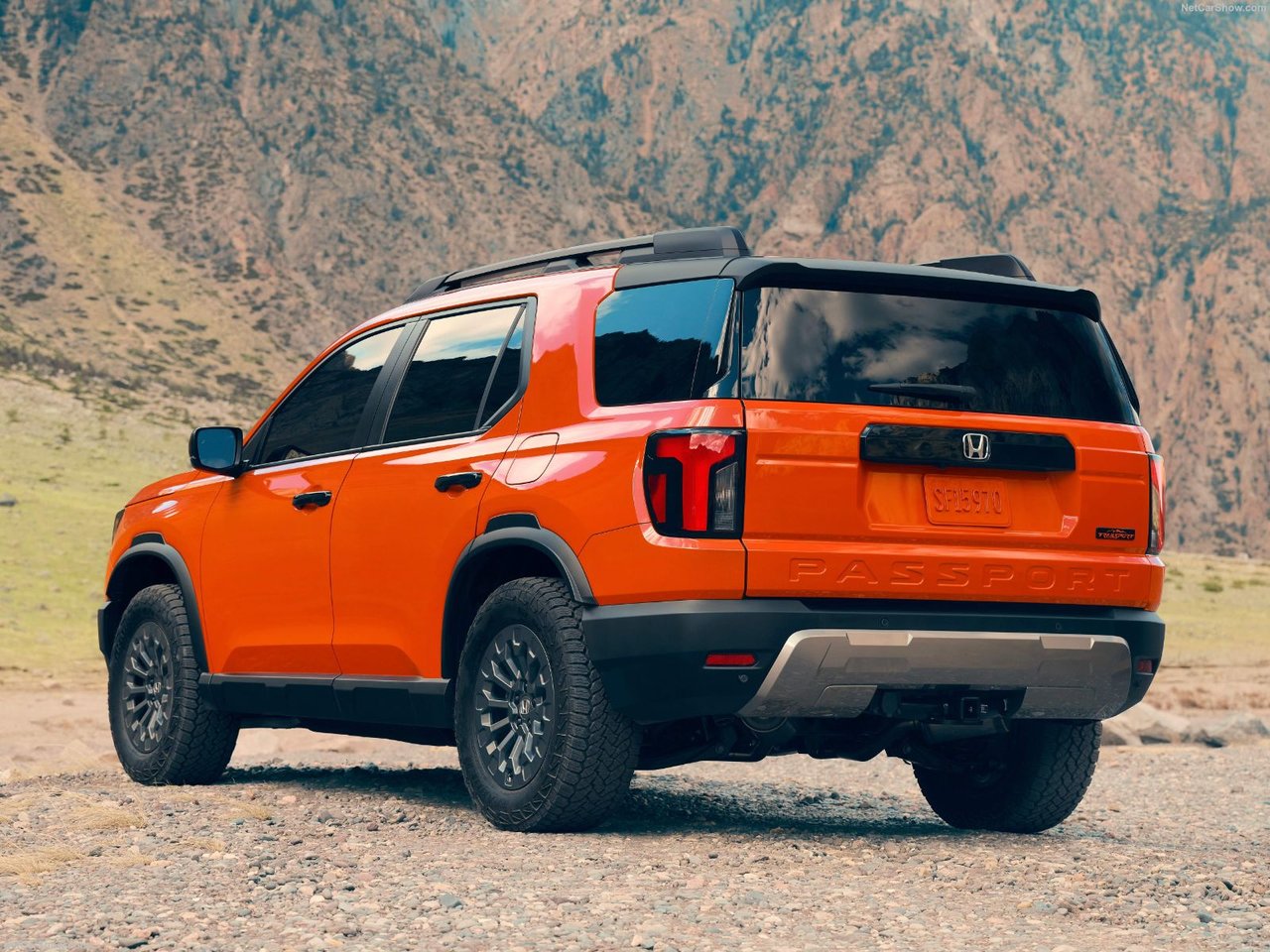
Its new dimensions include a length of 4,864 mm, a wheelbase of 2,885 mm and 210 mm of unloaded ground clearance. Approach and departure angles are 23.0 and 23.1 degrees, respectively. These dimensions help the Passport travel over uneven surfaces while maintaining the everyday proportions of a two-row midsize SUV.
The Canadian lineup consists of four versions:
- TrailSport;
- TrailSport Blackout;
- TrailSport Touring;
- TrailSport Touring Blackout.
The Blackout packages add darker visual elements, while Touring models introduce additional comfort and technology features. Regardless of version, Canadian buyers receive the Passport’s rugged TrailSport foundation rather than having to add it as an optional package.
Every model rides on 18-inch wheels with P275/60 R18 all-terrain tires. Front and rear recovery hooks, roof rails, underbody protection and an off-road-tuned suspension are also included throughout the lineup.
2. What engine does it use, and how much can it tow?
Every 2026 Passport is powered by a 3.5-litre V6 producing 285 hp at 6,100 rpm and 262 lb-ft of torque at 5,000 rpm. It is paired with a 10-speed automatic transmission and Honda’s second-generation Intelligent Variable Torque Management all-wheel-drive system, known as i-VTM4.
The V6 delivers the smooth and progressive power expected in a midsize SUV. The 10-speed transmission provides a broad selection of ratios for low-speed response, highway driving and towing.
The i-VTM4 system can distribute torque between the front and rear axles and between the individual rear wheels. This helps the Passport respond to changing traction conditions and can also improve its behaviour when turning.
Seven drive modes are provided:
- Normal;
- ECON;
- Snow;
- Sport;
- Tow;
- Trail;
- Sand.
The Passport can tow up to 2,268 kg, or 5,000 lb, when fitted with the required towing equipment and accessory package. Trailer Stability Assist is standard and is designed to help manage unwanted trailer movement.
Fuel consumption is rated at 12.6 L/100 km in the city, 9.9 L/100 km on the highway and 11.4 L/100 km combined. Regular gasoline is recommended, and the fuel tank holds 70 litres.
3. Is the 2026 Passport genuinely capable away from pavement?
Yes. The Passport is not intended to replace a highly specialized rock-crawling vehicle, but its standard equipment goes well beyond appearance upgrades.
Its off-road-tuned suspension, all-terrain tires and 210-mm ground clearance provide the foundation. The underbody protection helps shield important mechanical components, while the recovery hooks provide proper attachment points when assistance is required.
Trail and Sand drive modes adjust multiple vehicle systems for the selected terrain. Hill Descent Control helps regulate speed on steep downhill sections, allowing the driver to concentrate on steering. The available TrailWatch camera system on Touring models provides additional views around the vehicle when obstacles may be difficult to see from the driver’s seat.
The Passport’s 23-degree approach angle helps it climb onto uneven surfaces without contacting the front bumper as easily as a lower vehicle. Its 23.1-degree departure angle serves a similar purpose at the rear.
These features make it well suited to cottage roads, unpaved trails, deep snow and outdoor activities. As with any vehicle, actual capability still depends on tire condition, terrain, weather and driver judgment.
4. How much passenger and cargo space does it provide?
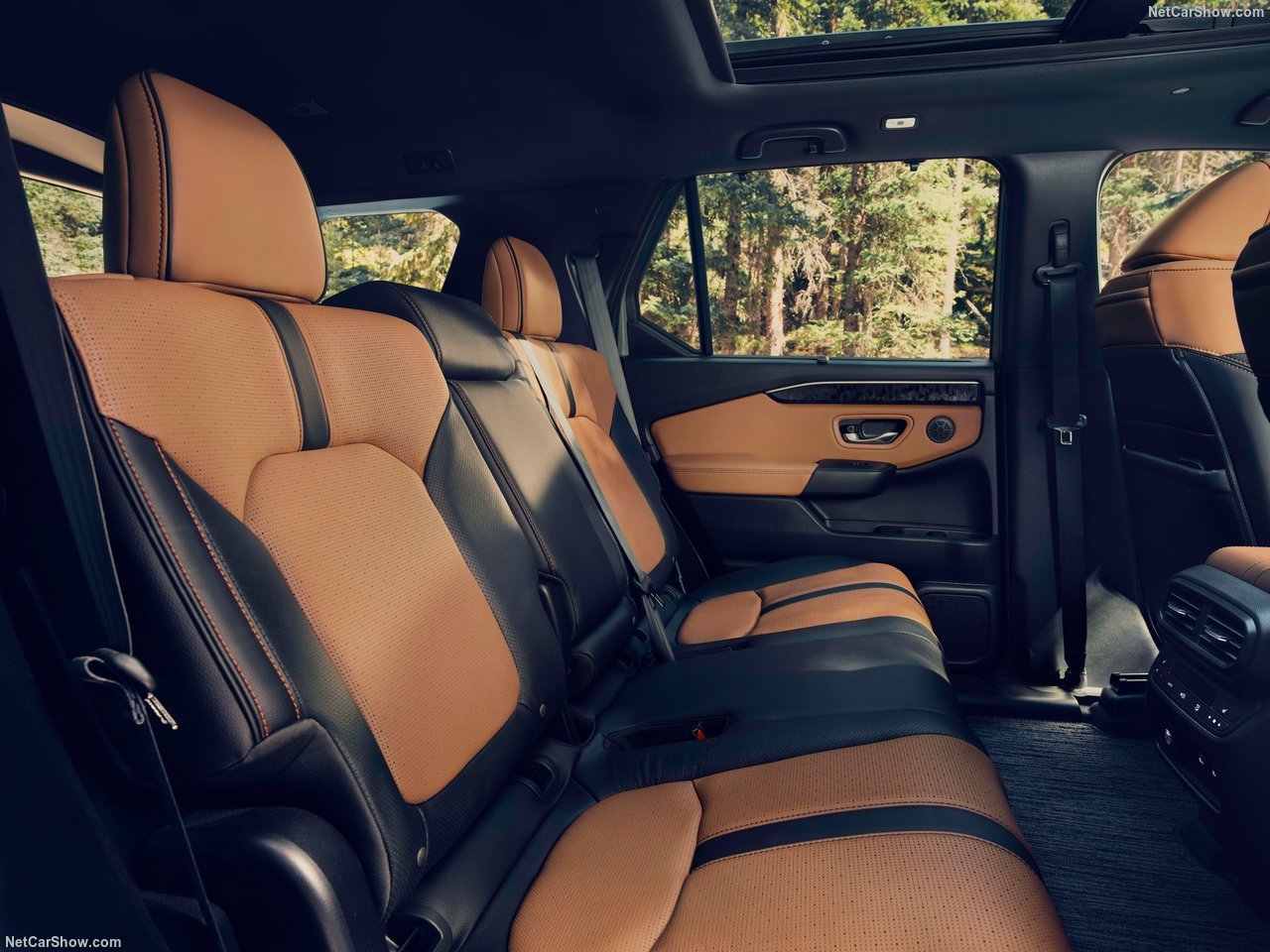
The Passport is strictly a five-passenger SUV. There is no third row, allowing Honda to dedicate more room to second-row passengers and cargo.
Passenger volume is 3,268 litres. Front occupants receive 1,043 mm of legroom, while rear passengers receive an impressive 1,039 mm. Headroom measures 994 mm in front and 1,007 mm in the second row.
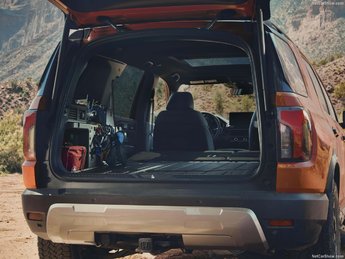
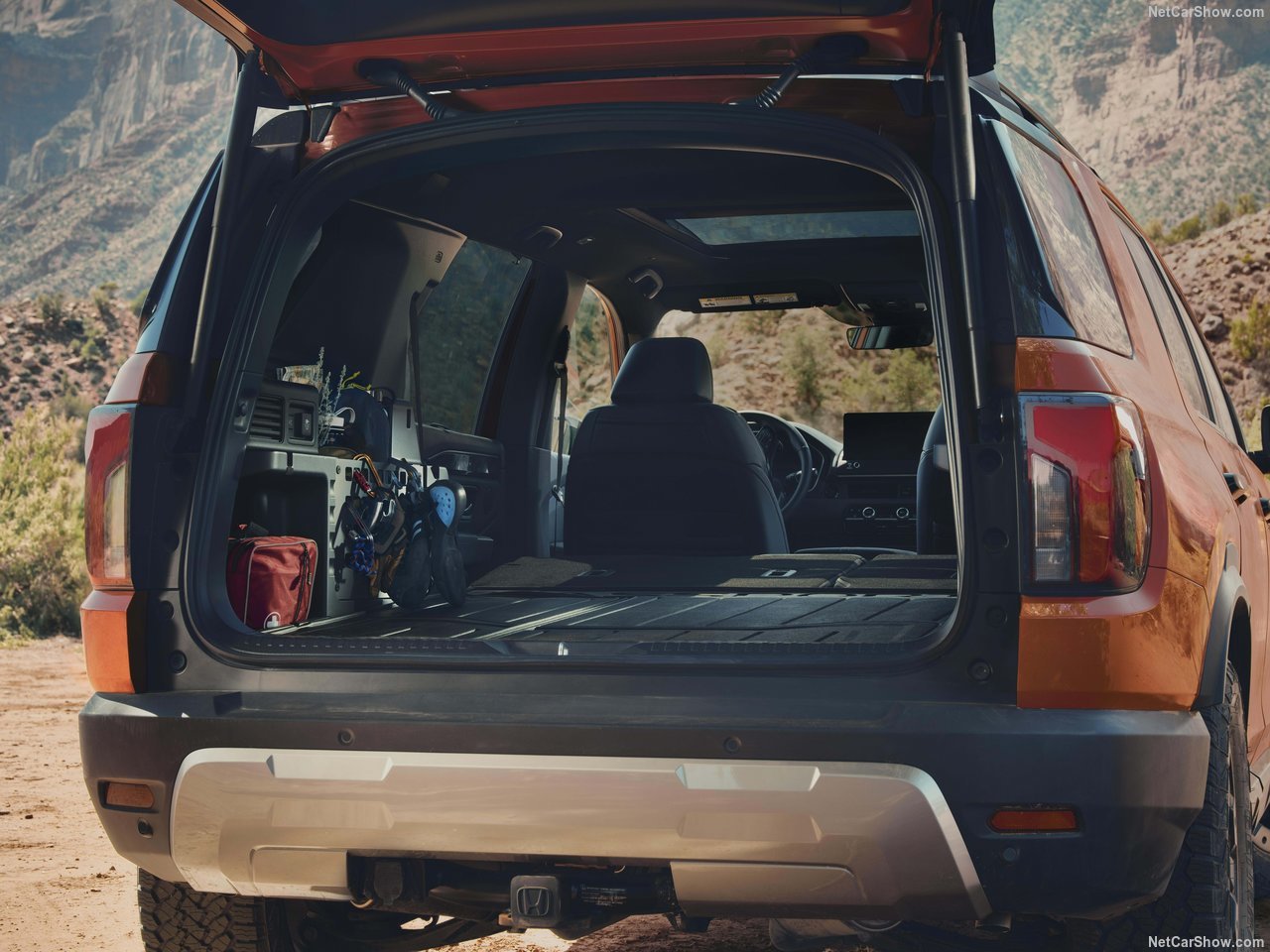
Behind the rear seats, the Passport provides 1,246 litres of cargo capacity. Folding the 60/40-split rear seat expands the available volume to as much as 2,356 litres. The broad cargo area can accommodate camping equipment, sports gear, luggage or larger household purchases.
Honda has also incorporated useful underfloor storage. The cargo area includes tie-down anchors, a built-in ledge designed to accept an accessory shelf and compartments for smaller objects. This helps separate frequently used equipment from the main cargo floor.
For buyers who do not need a third row, this configuration has an important advantage: all five occupants receive generous room while the cargo compartment remains useful even with every seat occupied.
5. What technology and safety equipment are included?
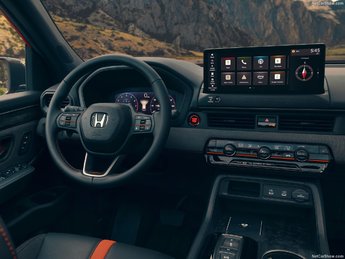
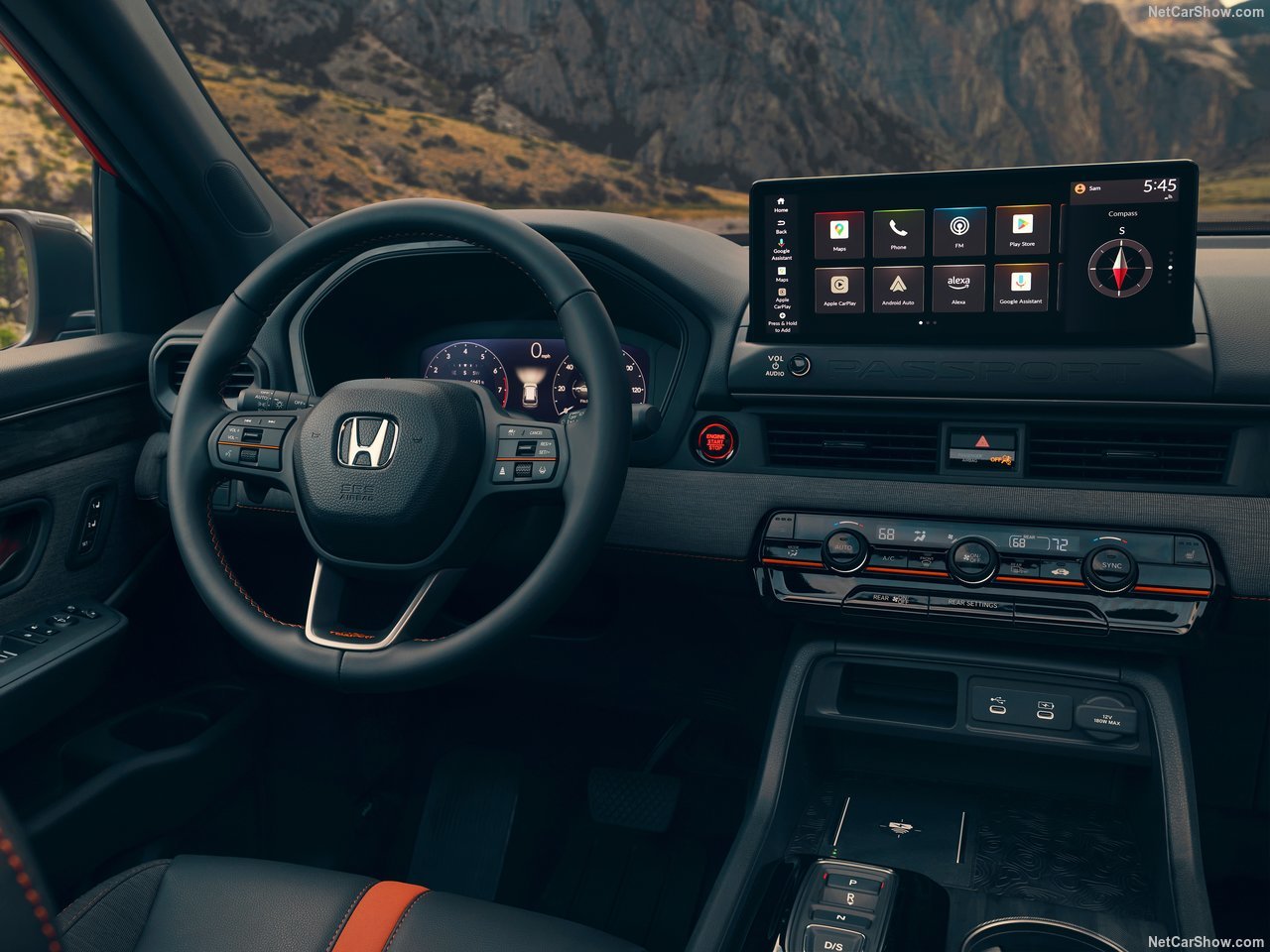
Every 2026 Passport includes a 12.3-inch centre touchscreen and a 10.2-inch digital instrument display. Wireless Apple CarPlay and Android Auto are standard, as are Google built-in, Amazon Alexa Built-In and a Qi-compatible wireless phone charger.
The USB arrangement includes connections for data and charging in front, along with high-output USB-C charging ports for both rows. A 115-volt power outlet is provided, with availability in the rear console area and cargo compartment.
Touring versions add a 12-speaker Bose premium audio system, replacing the nine-speaker system in the other models. They also receive the multi-view camera system with TrailWatch, ventilated front seats and heated outboard rear seats. All versions include heated front seats, a heated leather-wrapped steering wheel and tri-zone climate control.
The standard Honda Sensing suite includes:
- Adaptive Cruise Control with Low-Speed Follow;
- Collision Mitigation Braking System;
- Forward Collision Warning;
- Lane Keeping Assist System;
- Lane Departure Warning;
- Road Departure Mitigation;
- Traffic Jam Assist;
- Traffic Sign Recognition;
- Blind Spot Information with Lane Change Assist;
- Rear Cross Traffic Monitor;
- Low-Speed Braking Control.
These technologies can assist the driver, but they do not replace attentive driving or proper observation of surrounding traffic.
Is the 2026 Honda Passport the right SUV for you?
The Passport is particularly well suited to drivers who want more capability and cargo space than a compact SUV can provide but do not need the third row of a Honda Pilot. Its standard V6, sophisticated AWD system and 2,268-kg towing capacity also make it appropriate for buyers with recreational equipment or a properly sized trailer.
Its principal trade-offs are equally clear. It consumes more fuel than a compact SUV, and there is no hybrid version. It also seats five rather than seven or eight.
In return, the 2026 Passport delivers a rare combination of spacious two-row practicality, standard TrailSport capability and modern technology. Buyers can visit Honda Île-Perrot to compare the TrailSport, Blackout and Touring versions and determine which equipment level best fits their intended use.