
We Answer the 5 Most Frequent Questions We Receive on the 2026 Honda Passport
The 2026 Honda Passport is completely redesigned with a clearer focus on rugged capability. In Canada, every version belongs to the TrailSport...
Read more
Honda’s hybrid lineup demonstrates that efficiency does not have to come at the expense of performance. The 2026 Honda Civic Hybrid and 2026 Honda CR-V Hybrid use related two-motor hybrid technology, but each vehicle applies it to a different purpose.
The Civic Hybrid is a front-wheel-drive compact car designed to combine low fuel consumption with responsive acceleration and agile handling. The CR-V Hybrid adapts the same basic philosophy to a roomier all-wheel-drive SUV, adding more torque, cargo capacity and all-weather versatility.
Understanding how these systems work makes it easier to determine which hybrid Honda best matches your driving habits.
|
Specification |
2026 Civic Sedan Hybrid |
2026 CR-V Hybrid |
|
Gasoline engine |
2.0-litre four-cylinder |
2.0-litre four-cylinder |
|
Hybrid system |
Two electric motors |
Two electric motors |
|
Combined output |
200 hp |
204 hp |
|
Combined torque |
232 lb-ft |
247 lb-ft |
|
Drivetrain |
Front-wheel drive |
Real Time AWD |
|
Combined consumption |
4.9 L/100 km |
6.4 L/100 km; 6.7 L/100 km for TrailSport |
|
Cargo capacity |
419 L |
1,028 L; 2,030 L with rear seats folded |
|
Maximum towing capacity |
Not specified for towing |
453 kg with the required equipment |
A conventional gasoline vehicle normally sends engine power through a transmission with several fixed or continuously variable ratios. Honda’s hybrid system takes a different approach.
At lower and moderate speeds, the electric propulsion motor can do much of the work of moving the vehicle. The gasoline engine can generate electricity through a second motor, while the system determines how to distribute energy based on speed, battery charge and power demand.
Under suitable steady-speed conditions, the gasoline engine can also connect more directly to the wheels. This arrangement allows the system to use electric propulsion where it is particularly effective while still taking advantage of the gasoline engine during sustained driving.
The transition between operating modes happens automatically. There is no need to plug in either vehicle, and the driver does not have to select when the gasoline engine or electric motors operate. Energy captured during deceleration also helps recharge the hybrid battery.
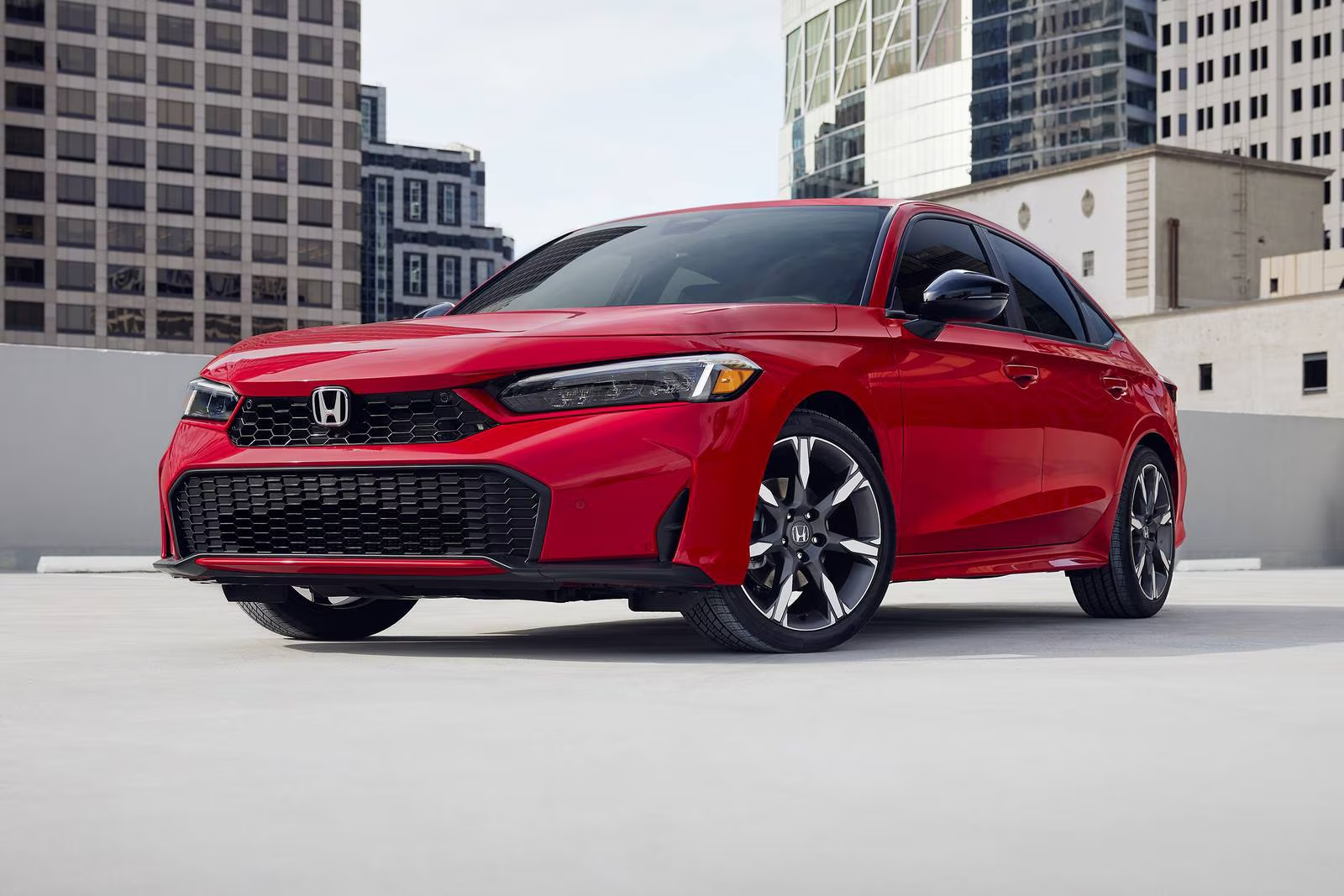
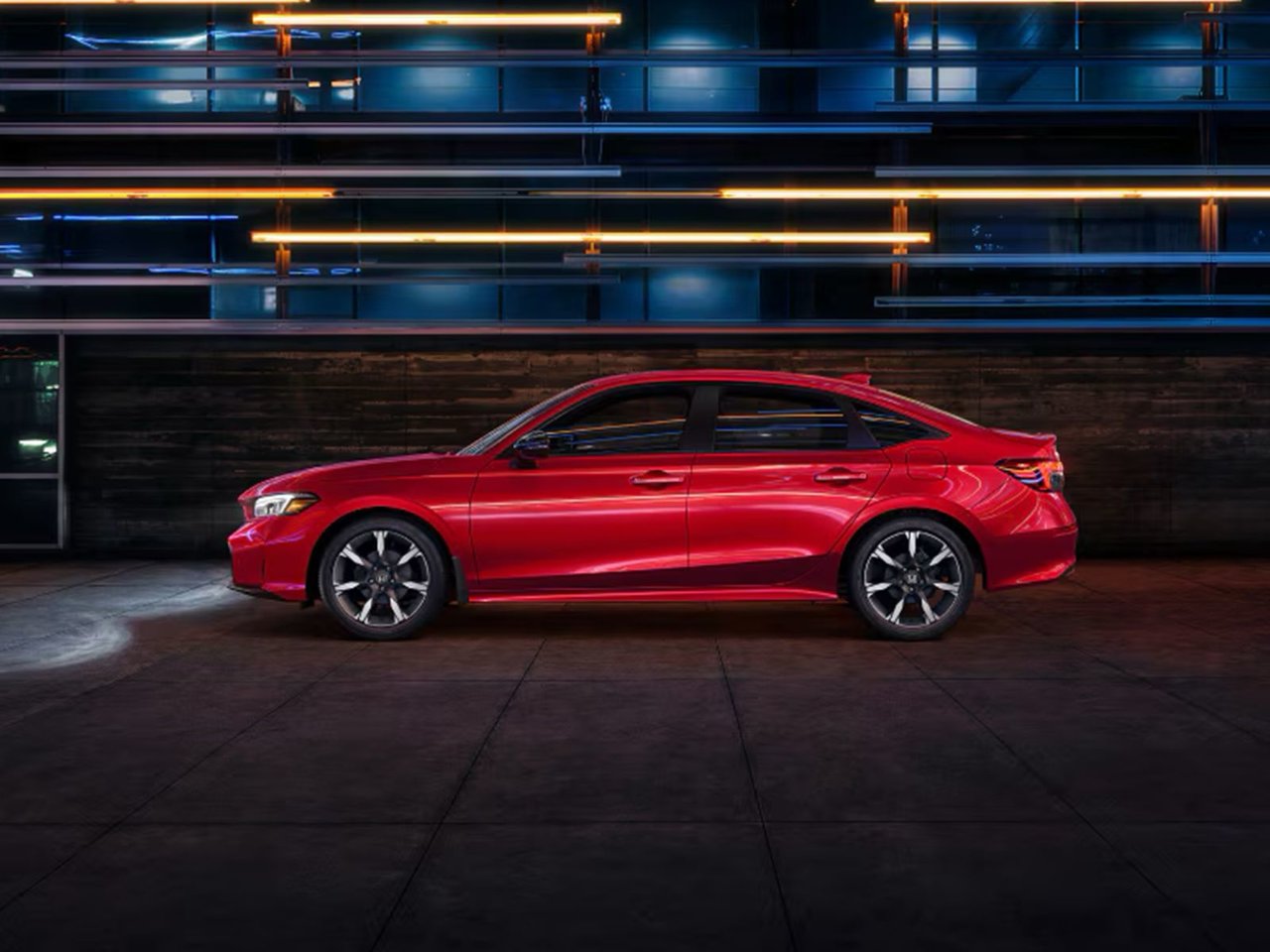
The 2026 Civic Sedan Hybrid combines a 2.0-litre four-cylinder engine with two electric motors. Total system output is 200 hp and 232 lb-ft of torque. Those numbers are significant in a compact sedan, particularly because the hybrid motor delivers strong torque at very low motor speeds.
The result is immediate response when leaving an intersection or merging into traffic. The Civic Hybrid is not simply the most efficient Civic in regular driving; it is also more powerful than the standard 150-hp gasoline Civic.
Its official Canadian fuel-consumption ratings are 4.7 L/100 km in the city, 5.1 L/100 km on the highway and 4.9 L/100 km combined. The slightly lower city figure reflects one of the principal advantages of a hybrid: it can recover energy during frequent deceleration and rely more heavily on electric propulsion at lower speeds.
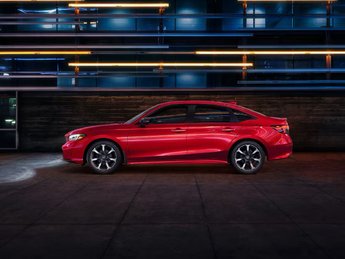
The Civic’s lower weight, front-wheel-drive layout and independent rear suspension also give it a more agile character. Drivers who value steering precision and a car-like seating position will likely prefer its road manners.
Both the Sport Hybrid and Sport Touring Hybrid include Normal, ECON and Sport driving modes. The Sport Touring Hybrid adds an Individual mode that allows further personalization. Steering-wheel-mounted deceleration selectors let the driver adjust the level of regenerative deceleration.
The CR-V Hybrid also uses a 2.0-litre four-cylinder engine and two electric motors, but its system produces 204 hp and 247 lb-ft of combined torque. The additional torque helps compensate for the CR-V’s greater size and weight.
All Canadian CR-V Hybrid versions are equipped with Real Time AWD. This is an important distinction from the front-wheel-drive Civic. The CR-V is better suited to drivers who regularly encounter snow-covered roads, travel to cottages or want the added traction of an SUV.
Most CR-V Hybrid models are rated at 6.0 L/100 km in the city, 6.9 L/100 km on the highway and 6.4 L/100 km combined. The TrailSport Hybrid returns 6.3, 7.2 and 6.7 L/100 km because its all-terrain tires and adventure-oriented equipment create different operating demands.
Although it cannot match the Civic’s 4.9 L/100 km combined rating, the CR-V Hybrid is exceptionally efficient for a spacious AWD SUV. It also compares favourably with the gasoline CR-V AWD, which is rated at 8.4 L/100 km combined.
The Civic Hybrid’s advantage is its combination of low weight, low centre of gravity and generous output. Its 200-hp system provides quick response without making the vehicle feel heavy or cumbersome. It is the more efficient and engaging choice for commuting, urban driving and paved-road travel.
The CR-V Hybrid uses its additional torque to move a larger vehicle confidently. Its elevated seating position, AWD system and more substantial body create a different driving experience. It is less agile than the Civic, but more versatile and better suited to changing road conditions.
Both vehicles use an electro-continuously variable transmission, or eCVT. This term describes the operation of the hybrid system rather than a conventional belt-and-pulley CVT. Power delivery is smooth, with no traditional gear changes interrupting acceleration.
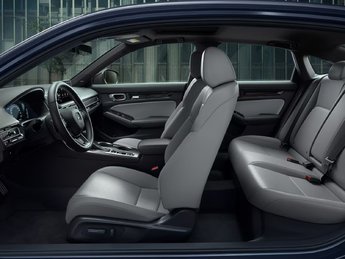
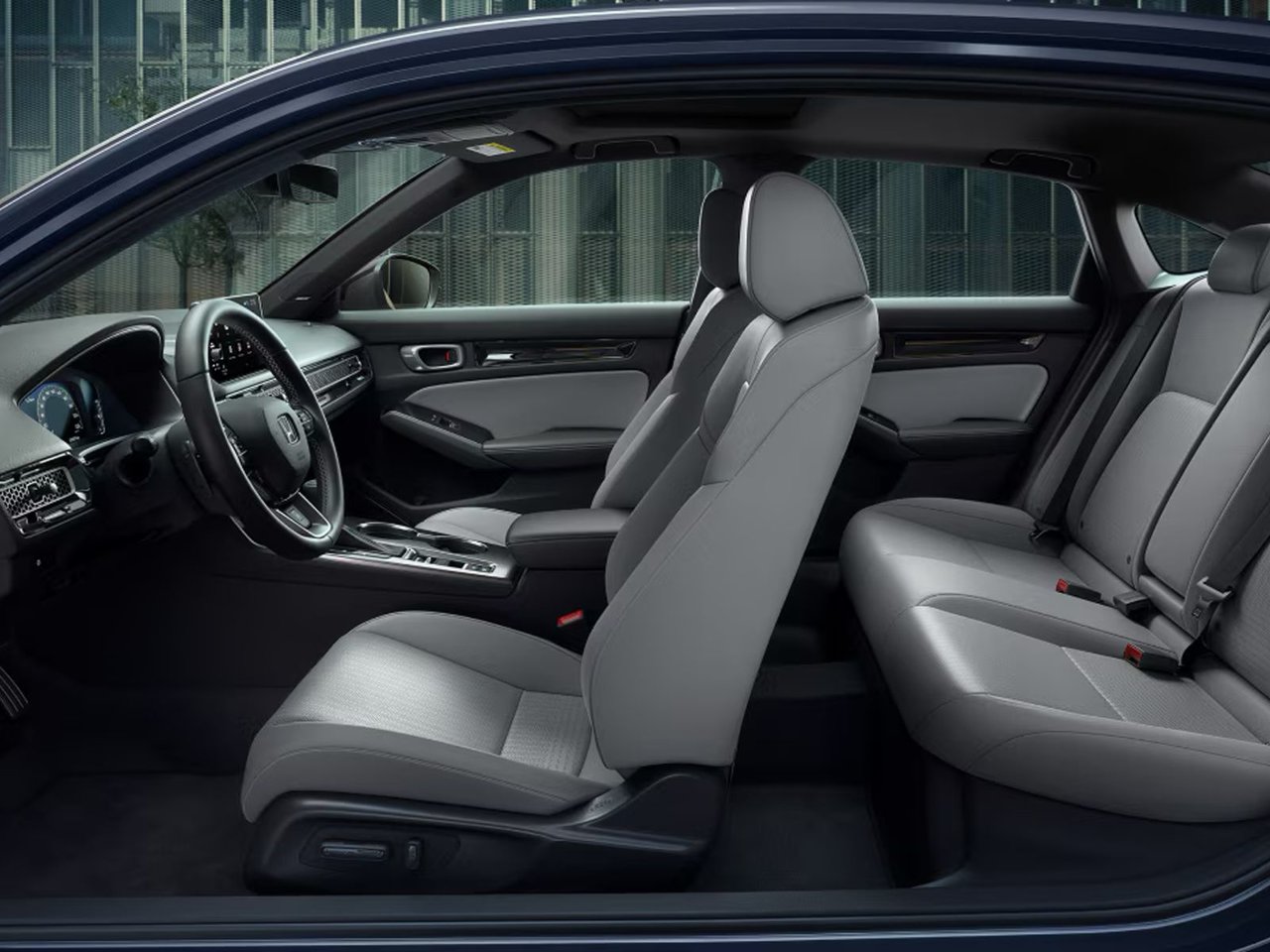
The Civic Sedan Hybrid provides a 419-litre trunk and seating for five. It is practical for commuting, groceries and road trips, but its separate trunk opening places limits on particularly bulky items.
The CR-V Hybrid provides 1,028 litres of cargo capacity behind its rear seats and 2,030 litres when those seats are folded. It also offers 1,042 mm of rear legroom and a wide rear hatch. Families carrying strollers, sports equipment or vacation luggage will find the CR-V considerably easier to use.
The CR-V Hybrid can also tow as much as 453 kg when properly equipped. It is not intended for heavy trailers, but that capacity can accommodate certain small utility applications. Honda does not publish a towing capacity for the Civic Hybrid.
Choose the 2026 Honda Civic Hybrid if your priorities include:
Choose the 2026 Honda CR-V Hybrid if you need:
The Civic Hybrid is the efficiency leader, but the CR-V Hybrid gives families considerably more flexibility while still delivering impressive fuel economy. Honda Île-Perrot can help drivers compare both models and experience how the same hybrid philosophy produces two distinctly different vehicles.
We Answer the 5 Most Frequent Questions We Receive on the 2026 Honda Passport
The 2026 Honda Passport is completely redesigned with a clearer focus on rugged capability. In Canada, every version belongs to the TrailSport...
Read more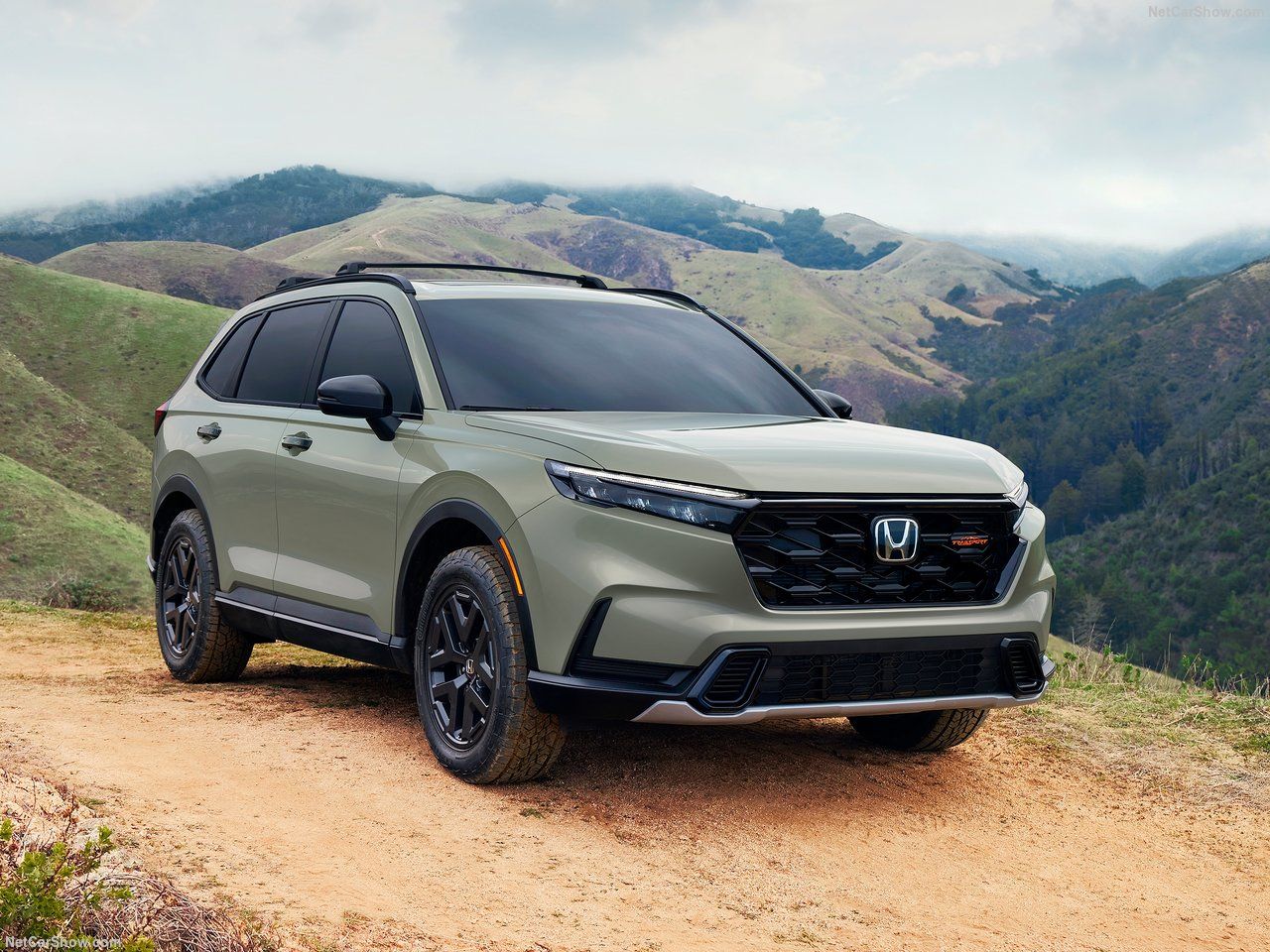
5 Notable Differences Between the 2026 Honda CR-V and the 2026 Honda HR-V
The 2026 Honda HR-V and 2026 Honda CR-V are two five-passenger SUVs that share several important qualities, including practical designs, advanced...
Read more
Is Your Student Ready for Back-to-School?
The new school year is approaching, and for many families, it marks an important new milestone: a busy schedule balancing classes and work, daily...
Read morePowered and developed by
