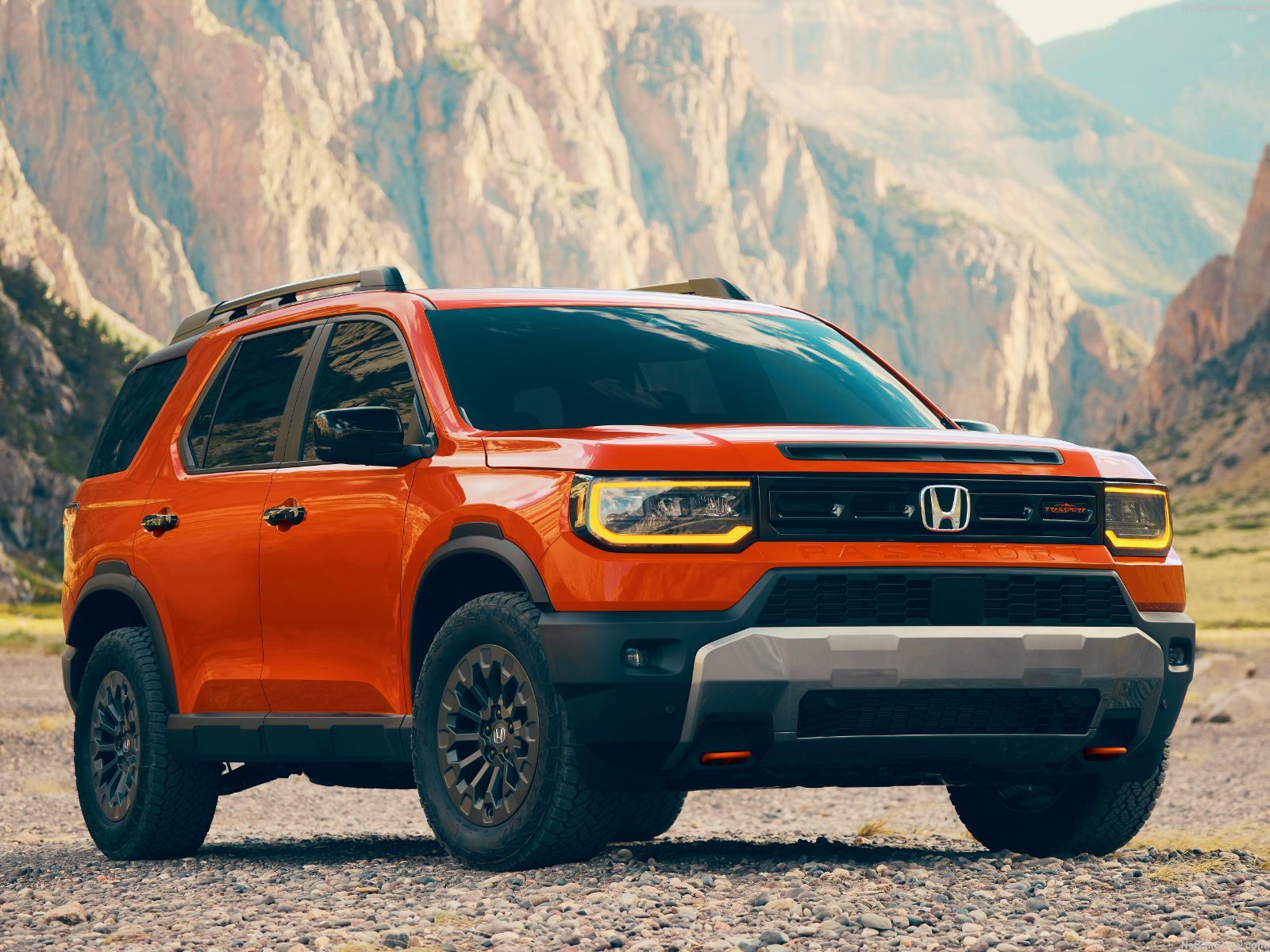
We Answer the 5 Most Frequent Questions We Receive on the 2026 Honda Passport
The 2026 Honda Passport is completely redesigned with a clearer focus on rugged capability. In Canada, every version belongs to the TrailSport...
Read more
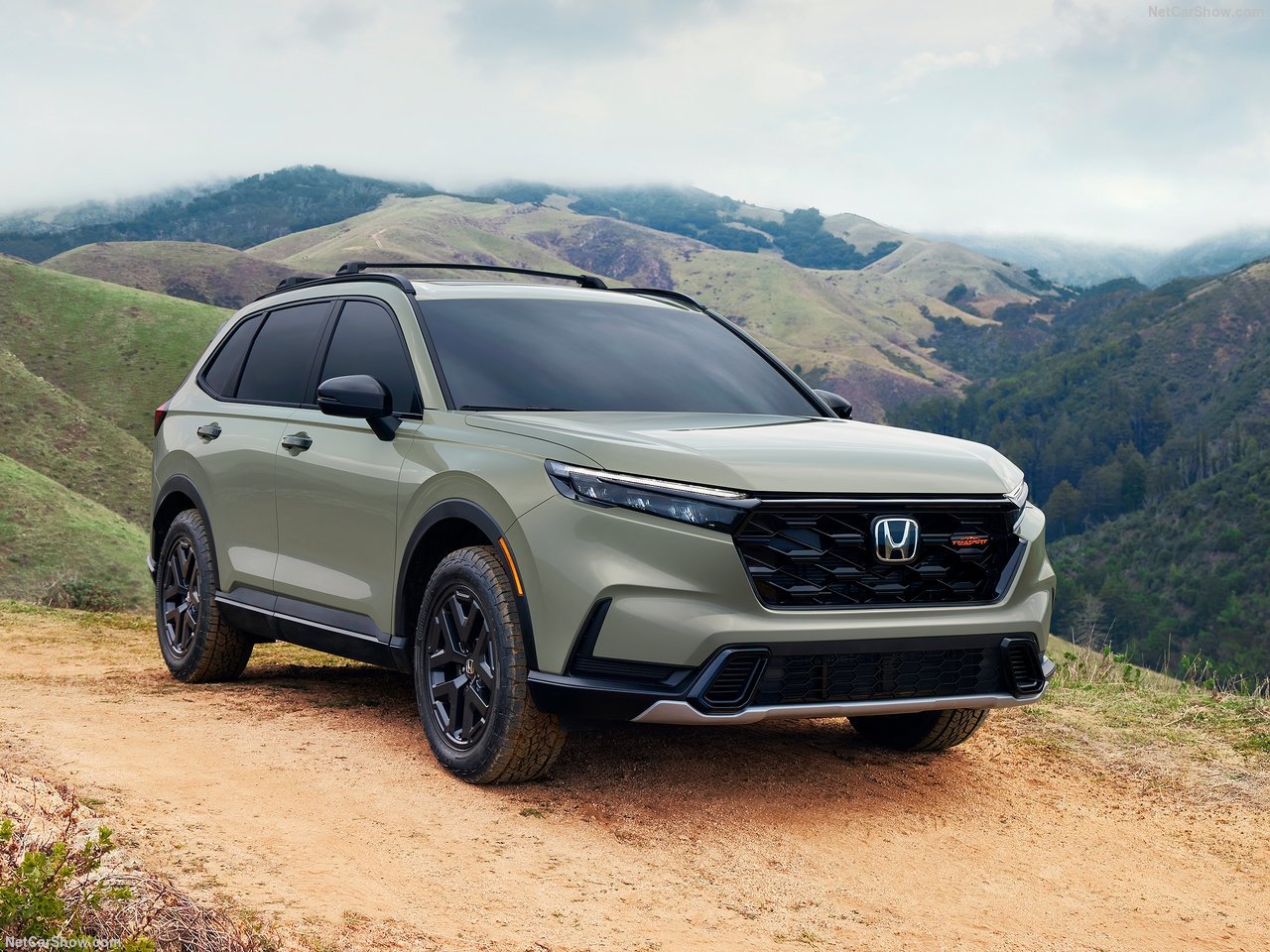
The 2026 Honda HR-V and 2026 Honda CR-V are two five-passenger SUVs that share several important qualities, including practical designs, advanced safety technologies, and available all-wheel drive. However, they address fairly different needs.
The HR-V is the more compact and affordable model. It is particularly well suited to urban driving, smaller families, and drivers who want the versatility of an SUV without choosing an overly large vehicle. The CR-V offers more space, power, and possibilities, including an available hybrid powertrain.
Here are the five main differences that should guide your decision.
2026 Honda CR-V vs. 2026 Honda HR-V
|
Feature |
2026 Honda HR-V |
2026 Honda CR-V |
|
Standard engine |
2.0-litre four-cylinder |
Turbocharged 1.5-litre four-cylinder |
|
Horsepower |
158 hp |
190 hp |
|
Torque |
138 lb-ft |
179 lb-ft |
|
Hybrid powertrain |
Not available |
204 hp and 247 lb-ft |
|
Drivetrain |
Front-wheel drive or all-wheel drive |
Front-wheel drive or all-wheel drive, depending on the trim |
|
Combined consumption, FWD |
8.3 L/100 km |
7.8 L/100 km |
|
Combined consumption, AWD |
8.7 L/100 km |
8.4 L/100 km with turbo engine |
|
Combined consumption, hybrid AWD |
Not available |
6.4 or 6.7 L/100 km |
|
Cargo capacity, seats upright |
691 L |
1,113 L gasoline; 1,028 L hybrid |
|
Cargo capacity, seats folded |
1,559 L |
2,166 L gasoline; 2,030 L hybrid |
|
Rear legroom |
958 mm |
1,042 mm |
|
Length |
4,568 mm |
4,695 mm |
|
Towing capacity |
No published towing capacity |
Up to 680 kg gasoline or 453 kg hybrid with required equipment |
Fuel-consumption ratings are estimates based on Canada’s five-cycle testing method. Actual fuel consumption will vary according to driving and other conditions.
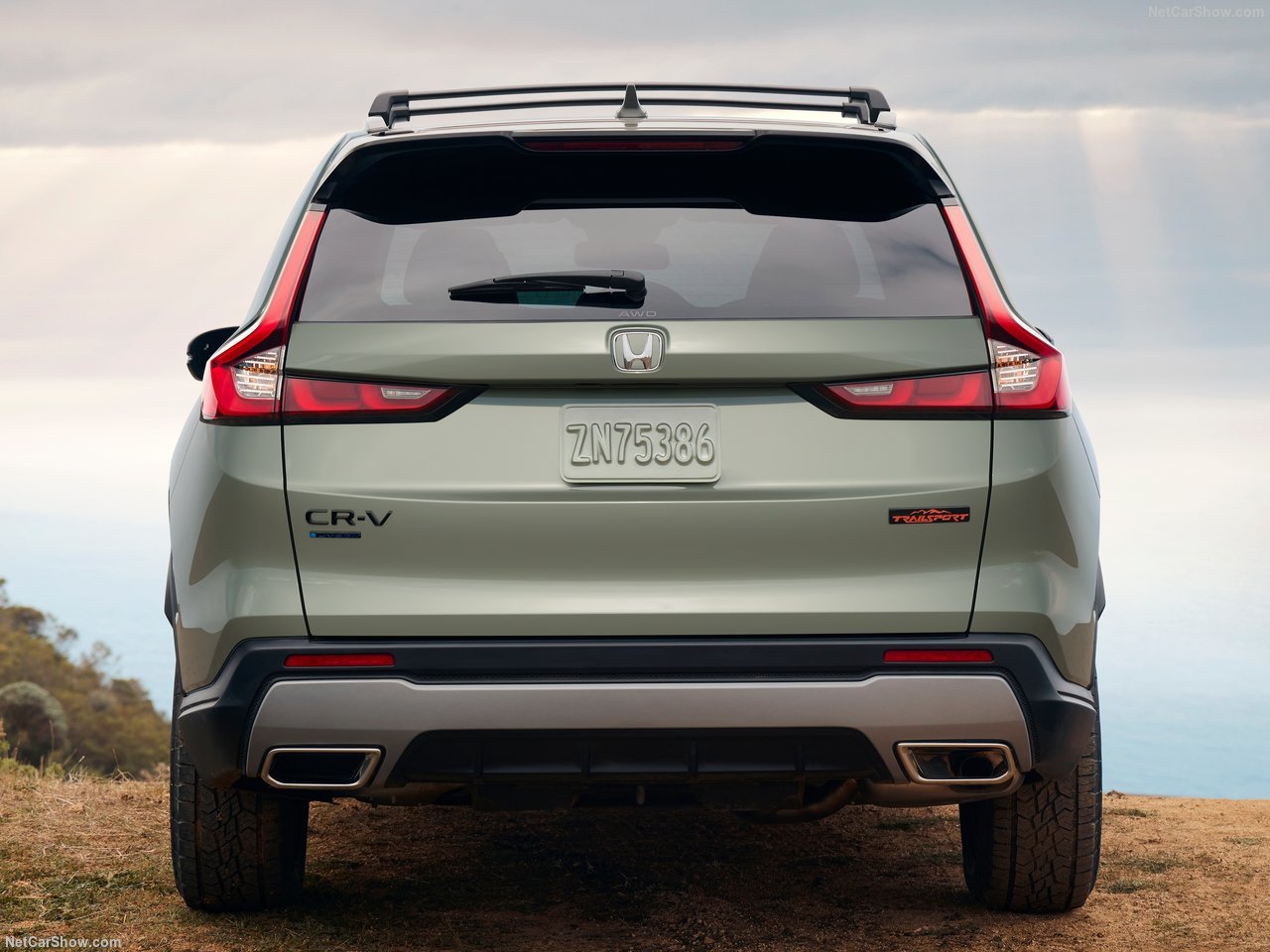
The first difference is noticeable before you even step inside. At approximately 4,568 mm long, the HR-V is shorter than the CR-V, which measures 4,695 mm. The 127-mm difference may seem modest on paper, but it can be valuable in a tight parking lot, on a narrow street, or inside a smaller garage.
The HR-V therefore feels easier to place on the road. It is a logical choice for someone who primarily drives in the city or is replacing a compact car with a first SUV. Its elevated driving position and rear hatch add versatility without significantly increasing its overall footprint.
The CR-V remains easy to drive for a compact SUV, but its longer body serves a different purpose: maximizing passenger and cargo space.
Every 2026 HR-V uses a naturally aspirated 2.0-litre engine producing 158 hp and 138 lb-ft of torque. It is paired with a continuously variable transmission. This powertrain prioritizes smooth, predictable power delivery and is well suited to everyday driving.
The gasoline CR-V uses a turbocharged 1.5-litre engine developing 190 hp and 179 lb-ft of torque. It therefore provides 32 more horsepower and an additional 41 lb-ft compared with the HR-V. This difference is particularly noticeable during acceleration, passing manoeuvres, and trips with several passengers aboard.
The CR-V is also available with a two-motor hybrid system. It produces a combined 204 hp and 247 lb-ft of torque. The more immediate response of the electric motor contributes to energetic starts and natural-feeling acceleration.
For drivers who value simplicity and mainly complete shorter trips, the HR-V’s performance may be more than sufficient. For highway driving, family trips, or a more responsive experience, the CR-V has a clear advantage.
The HR-V is available with front-wheel drive on the LX model or Real Time AWD. The front-wheel-drive version consumes 9.1 L/100 km in the city, 7.4 L/100 km on the highway, and 8.3 L/100 km combined. All-wheel-drive versions are rated at 9.5, 7.8, and 8.7 L/100 km, respectively.
Despite its larger size and greater output, the turbocharged CR-V is slightly more efficient. The front-wheel-drive model consumes 8.4 L/100 km in the city, 7.1 L/100 km on the highway, and 7.8 L/100 km combined. With all-wheel drive, the respective ratings increase to 9.1, 7.6, and 8.4 L/100 km.
The difference becomes even more significant with the CR-V Hybrid. Most hybrid versions are rated at 6.0 L/100 km in the city, 6.9 L/100 km on the highway, and 6.4 L/100 km combined. The TrailSport Hybrid, which is equipped with all-terrain tires, returns 6.7 L/100 km combined.
The HR-V remains the more affordable of the two vehicles. However, the CR-V Hybrid can be particularly attractive to drivers who cover considerable distances, especially in urban traffic.
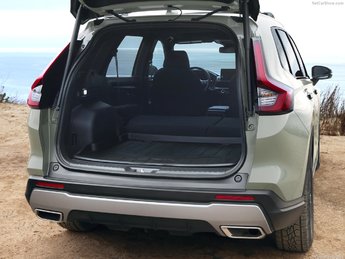
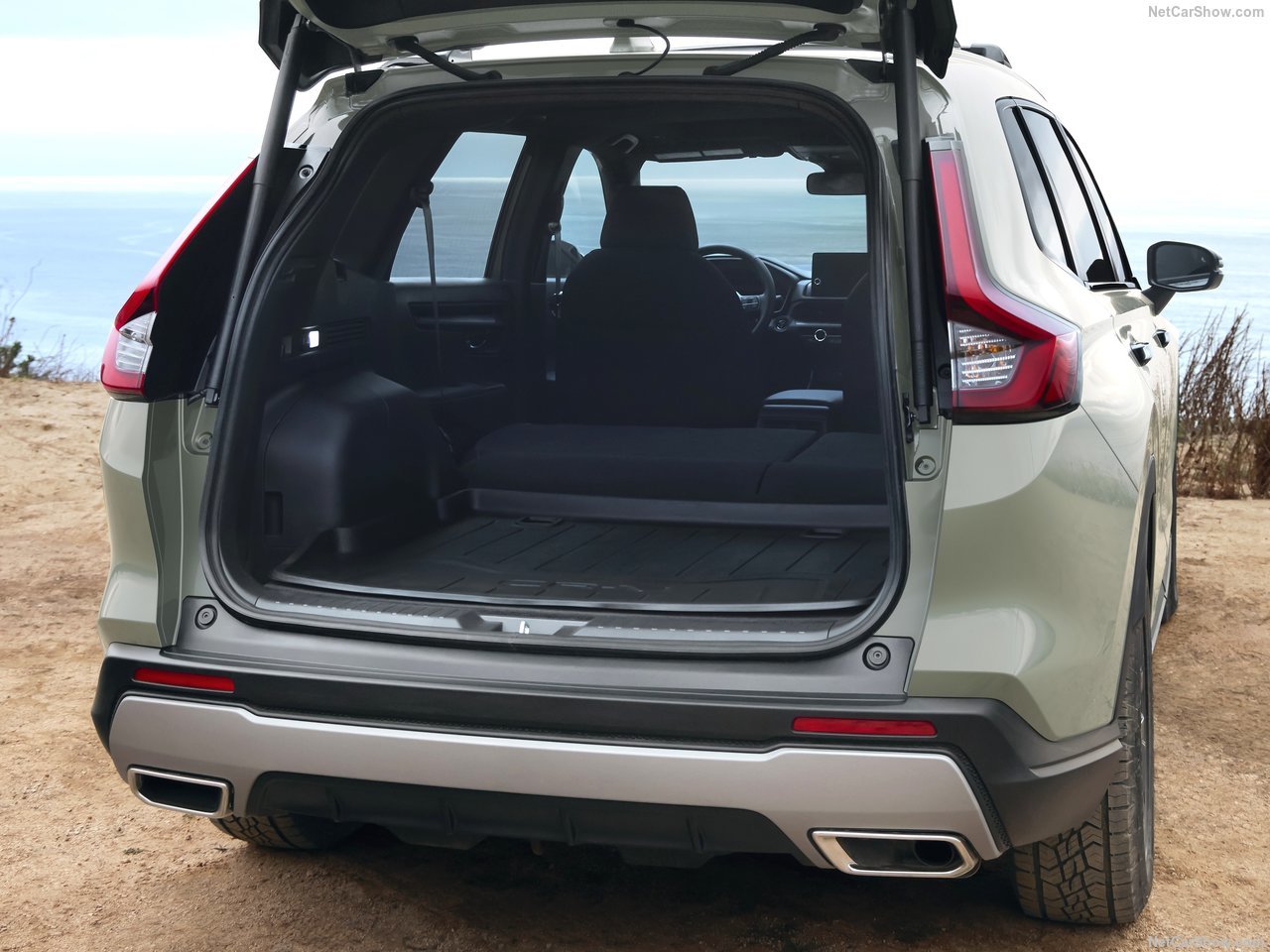
Cargo volume is likely the most important difference for a family. The HR-V provides 691 litres behind its rear seats and 1,559 litres when the rear seatbacks are folded.
The gasoline CR-V offers 1,113 litres behind the second row, providing 422 additional litres. Folding the seats expands its capacity to 2,166 litres, which is 607 litres more than the HR-V.
Certain hybrid powertrain components slightly reduce the available cargo volume. Nevertheless, the CR-V Hybrid still provides 1,028 litres behind the second row and 2,030 litres with the seats folded. It therefore remains considerably roomier than the HR-V.
The HR-V can easily accommodate groceries, luggage, or several pieces of sports equipment. The CR-V will be more practical for a stroller, camping gear, bulky items, or a family’s luggage during a longer trip.
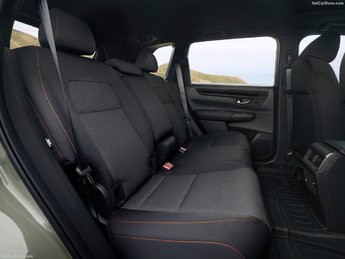
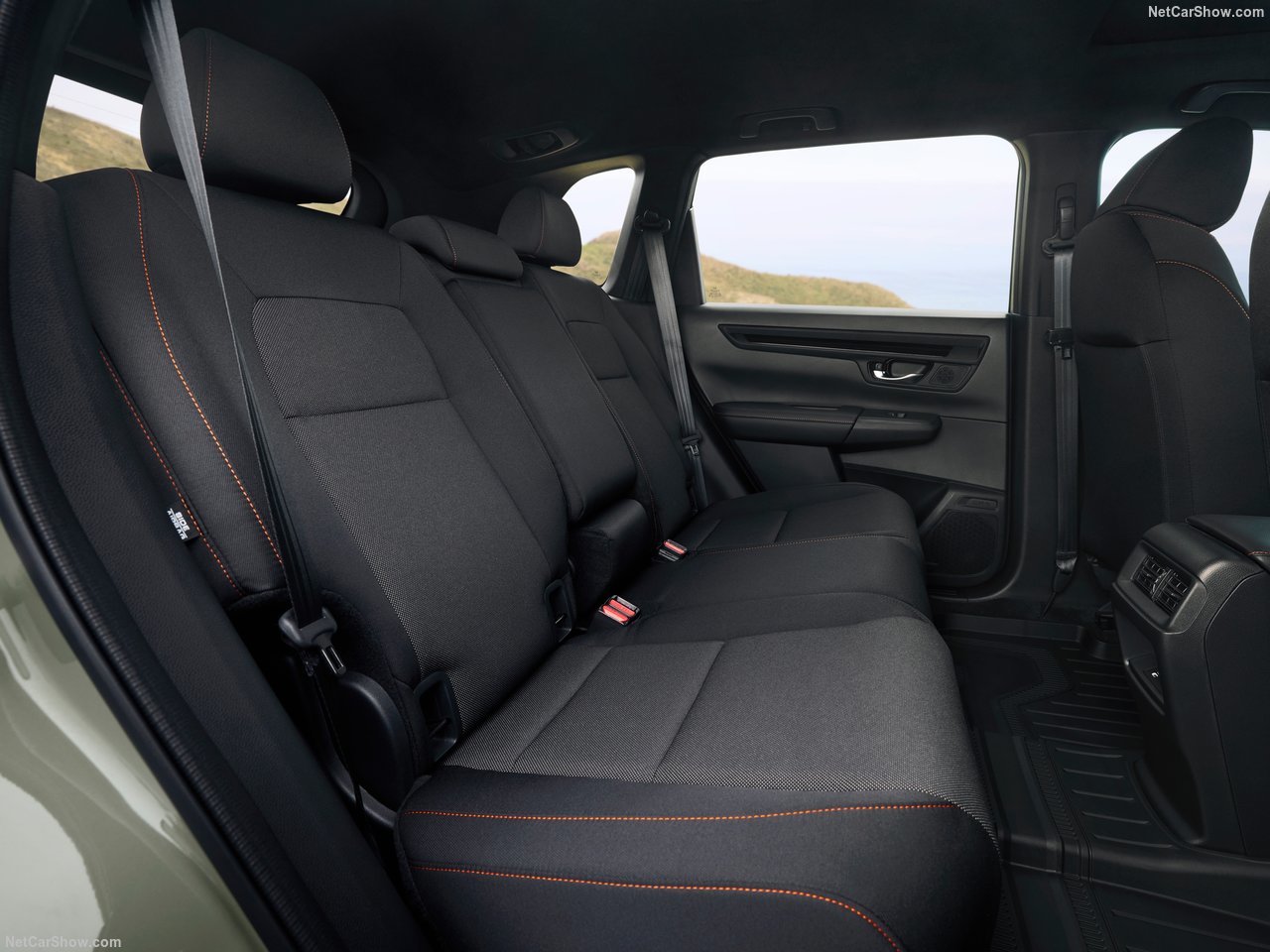
Both models can seat five people, but the CR-V is more generous in the second row. It provides 1,042 mm of rear legroom, compared with 958 mm in the HR-V. This 84-mm difference becomes obvious when adults sit in the rear or when child seats are installed.
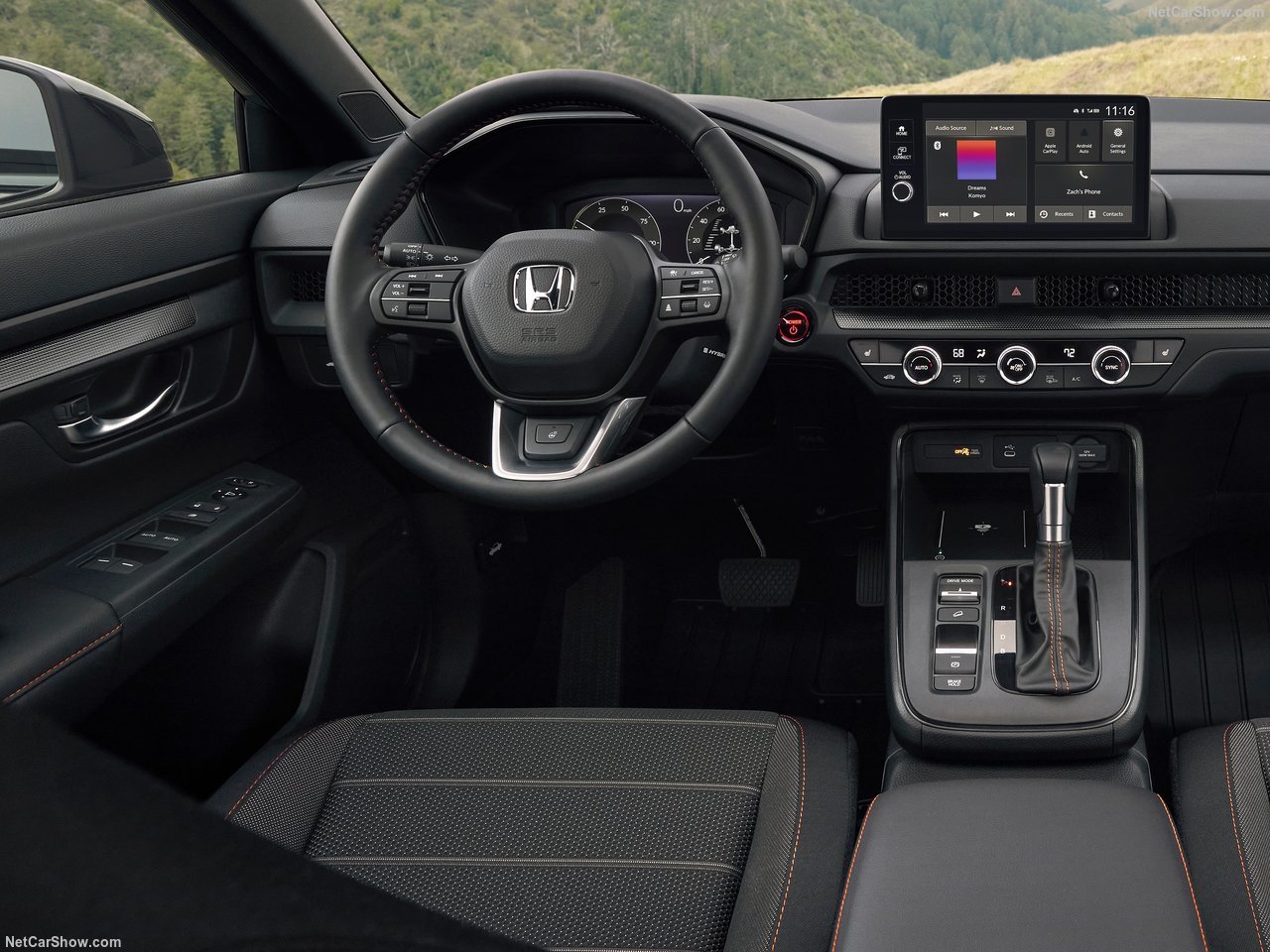
The HR-V remains spacious for its size. It even provides slightly more front legroom, with 1,064 mm compared with 1,049 mm in the CR-V. It is consequently well suited to an individual, a couple, or a smaller family that only uses the rear seat occasionally.
The CR-V is better adapted to regular family use. Its larger passenger compartment also makes it easier to install children, load various items, and travel longer distances with multiple occupants.
The 2026 Honda HR-V should be considered if you are looking for:
The 2026 Honda CR-V will generally be more appropriate if you need:
In short, the HR-V emphasizes affordability, manoeuvrability, and a size well suited to the city. The CR-V requires a larger investment but provides more space, performance, and efficiency. A test drive at Honda Île-Perrot will allow you to directly compare the driving positions, rear-seat space, and performance of the different powertrains.
We Answer the 5 Most Frequent Questions We Receive on the 2026 Honda Passport
The 2026 Honda Passport is completely redesigned with a clearer focus on rugged capability. In Canada, every version belongs to the TrailSport...
Read more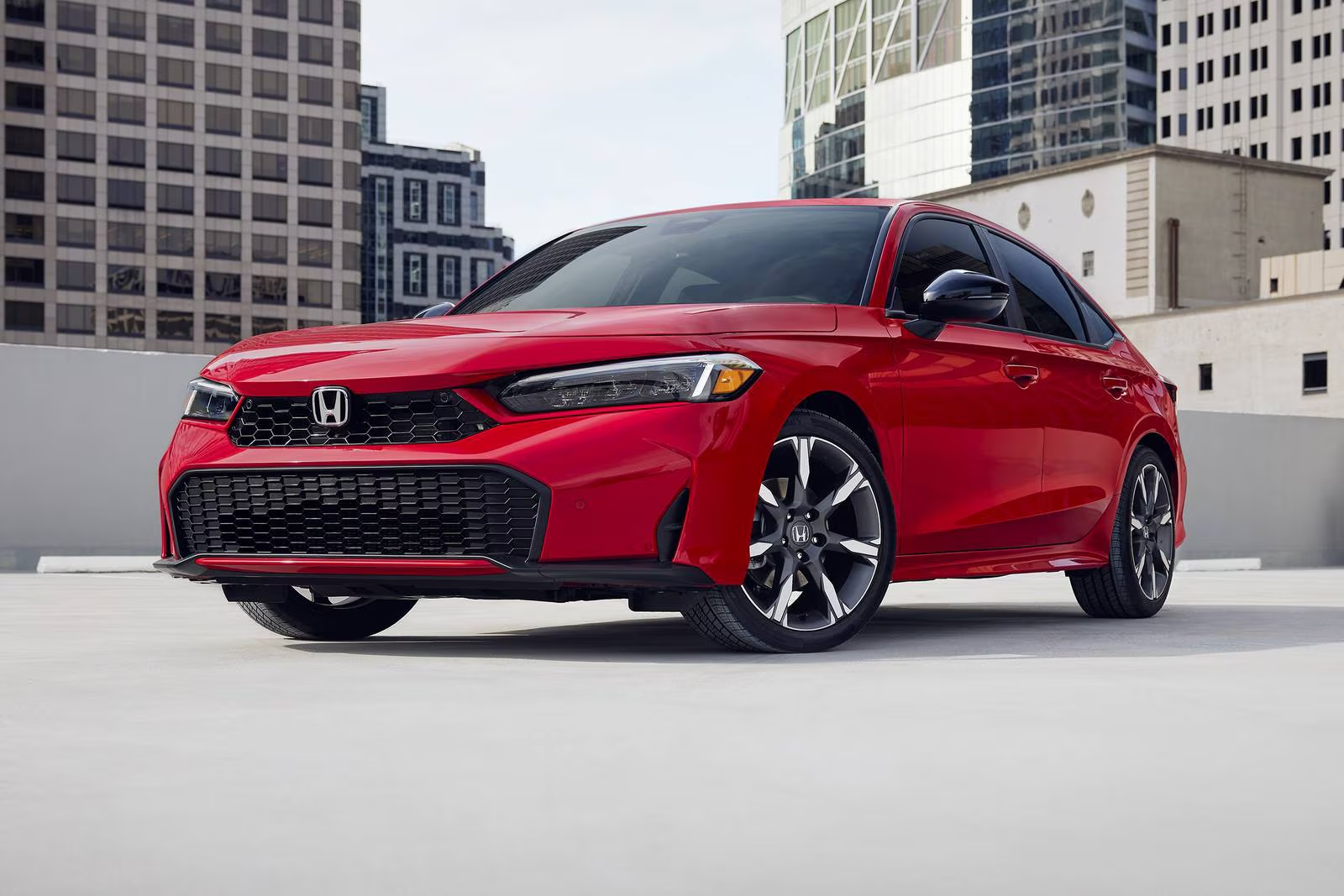
From the 2026 Honda Civic Hybrid to the 2026 Honda CR-V Hybrid: Exploring Honda Hybrid Engines and Performance
Honda’s hybrid lineup demonstrates that efficiency does not have to come at the expense of performance. The 2026 Honda Civic Hybrid and 2026 Honda...
Read more
Is Your Student Ready for Back-to-School?
The new school year is approaching, and for many families, it marks an important new milestone: a busy schedule balancing classes and work, daily...
Read morePowered and developed by
